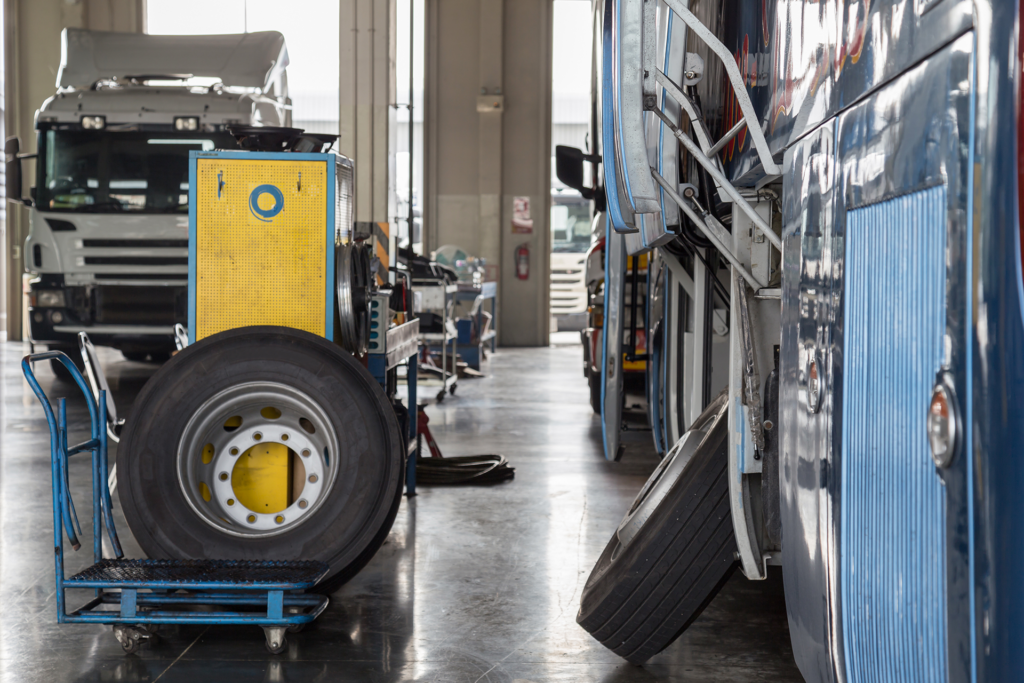
Walk into any heavy-duty maintenance shop and you’ll notice one thing immediately: size changes everything. A Class 8 truck, articulated bus, or fire apparatus cannot be serviced using the same equipment designed for passenger vehicles. Lifting 40,000 pounds—or much more—requires engineering, precision, and safety systems working together seamlessly.
Modern big truck lifts do far more than simply raise a vehicle. They improve technician access, reduce downtime, increase workshop productivity, and help fleets keep vehicles on the road. Understanding how these systems work also helps maintenance managers choose equipment that fits their daily operations.
It all starts with stability
The first objective of any heavy-duty lifting system is stability. Unlike light vehicles, trucks and buses have uneven weight distribution. A refuse truck, for example, carries far more weight over the rear axle than a delivery truck. Electric buses add another challenge with large battery packs positioned underneath the chassis.
Heavy-duty lifts are designed to compensate for these differences. Rather than relying solely on lifting force, they maintain constant synchronization between every lifting point, ensuring the vehicle remains level throughout the lifting process. That stability protects both the equipment and the technicians working underneath.

Every wheel becomes a lifting point
Among the most common column truck lifts used by commercial fleets are mobile systems built around independent lifting columns.. Instead of supporting the vehicle from a central platform, individual lifting columns are positioned at each wheel. Each column grips the tire securely before lifting begins. Once every column communicates with the others, they operate as one synchronized system.
As the operator starts the lift, every column raises at exactly the same speed. Even if one wheel carries a greater portion of the vehicle’s weight, the system continuously adjusts to keep the truck perfectly level. This synchronized movement is one of the biggest differences between heavy-duty lifting equipment and conventional automotive lifts.
Hydraulic or electromechanical power
Modern truck lifts generally use either hydraulic or electromechanical technology. Hydraulic systems generate lifting force using pressurized fluid. Pumps move hydraulic oil through cylinders, producing tremendous lifting capacity while maintaining smooth operation.
Electromechanical systems rely on electric motors, precision gearboxes, and screw drives to generate movement. These systems eliminate hydraulic fluid while delivering highly accurate lifting control and simplified maintenance. Both technologies are widely used across the heavy-duty industry. The best choice depends on workshop preferences, maintenance strategy, and operating conditions.
Synchronization is the real engineering challenge
Generating lifting power is only part of the equation. The real complexity lies in ensuring that every lifting column remains perfectly synchronized throughout the entire operation. A difference of even a small fraction of an inch between columns can create unnecessary stress on the vehicle.
Modern control systems constantly exchange information between each lifting column. Sensors monitor height, position, and lifting speed hundreds of times during every lifting cycle. If any variation is detected, the control system immediately compensates to maintain perfect alignment. For technicians underneath the vehicle, this process happens almost invisibly, but it is one of the most important safety features built into today’s lifting equipment.
Do you have a question about our mobile column truck lifts?
Designed around workshop efficiency
A heavy-duty maintenance shop rarely services identical vehicles all day long. One morning may involve a transit bus, followed by a municipal snowplow, a utility truck, and several highway tractors. Fixed lifting systems can sometimes limit workshop flexibility. Because they can be moved wherever they are needed, mobile truck lifts solve this challenge. Technicians simply position the columns around the vehicle, connect the system, and begin lifting.
When the repair is complete, the columns can be relocated to another service bay, allowing the same equipment to support multiple workstations throughout the day. This flexibility helps maximize workshop space while increasing equipment utilization.
Better access means faster repairs
From a technician’s perspective, accessibility directly affects productivity. When a truck is lifted from its wheels, the entire underside becomes accessible. Mechanics can easily inspect suspension components, brake systems, steering assemblies, transmissions, differentials, driveshafts, and exhaust systems without unnecessary obstructions.
Wheel removal is equally straightforward because each wheel can be accessed independently when appropriate lifting accessories are used. This unrestricted access reduces repair times while improving inspection quality during preventive maintenance.
Safety never stops during the lift
Heavy-duty lifting systems continue monitoring vehicle stability from the moment lifting begins until the truck is safely back on the ground. Modern systems typically include automatic mechanical locking devices, overload protection, emergency stop controls, synchronization monitoring, and fault detection systems. If an abnormal condition is detected, lifting stops immediately.
Many workshops also appreciate intuitive operator interfaces that simplify training while reducing the possibility of operating errors. These safety features allow technicians to concentrate on vehicle maintenance instead of worrying about lifting stability.
Choosing the right truck lift for long-term performance
Purchasing a truck lift is a long-term operational decision rather than simply buying workshop equipment. Fleet managers should consider current vehicle types, future fleet growth, available floor space, maintenance schedules, technician workflow, and expected daily lifting cycles. A system that supports operational flexibility today can continue delivering value as fleets expand and vehicle technologies evolve.
At SEFAC, every heavy-duty lifting solution is designed with real workshop conditions in mind. From transit authorities and fleet maintenance centers to OEM service facilities and commercial repair shops, SEFAC lifting systems combine precision engineering, advanced synchronization technology, and robust construction to improve safety, maximize uptime, and help technicians work more efficiently every day.