Fleet downtime is one of the most significant challenges facing transportation companies, logistics providers, municipal fleets, and commercial vehicle operators. Every hour a truck remains out of service can result in lost revenue, delayed deliveries, increased operating costs, and dissatisfied customers. As fleet utilization rates continue to rise, maintenance teams are under pressure to complete inspections and repairs faster than ever.
One solution that has become increasingly important for modern maintenance facilities is the use of big truck lifts. Designed to safely raise heavy-duty vehicles for servicing, these lifting systems help workshops improve efficiency, accelerate repairs, and maximize vehicle availability. By reducing maintenance bottlenecks and improving technician productivity, big truck lifts play a critical role in minimizing fleet downtime.

Why fleet downtime is so costly
Downtime affects much more than a single vehicle. When a truck is unavailable, transportation schedules can be disrupted, replacement vehicles may be required, and operational costs quickly increase.
For large fleets, even minor maintenance delays can create a ripple effect throughout the organization. Unplanned downtime is particularly expensive because emergency repairs often require additional labor, expedited parts delivery, and schedule adjustments.
Reducing vehicle downtime has therefore become a key performance indicator for fleet managers seeking to improve operational efficiency and profitability.
What are big truck lifts?
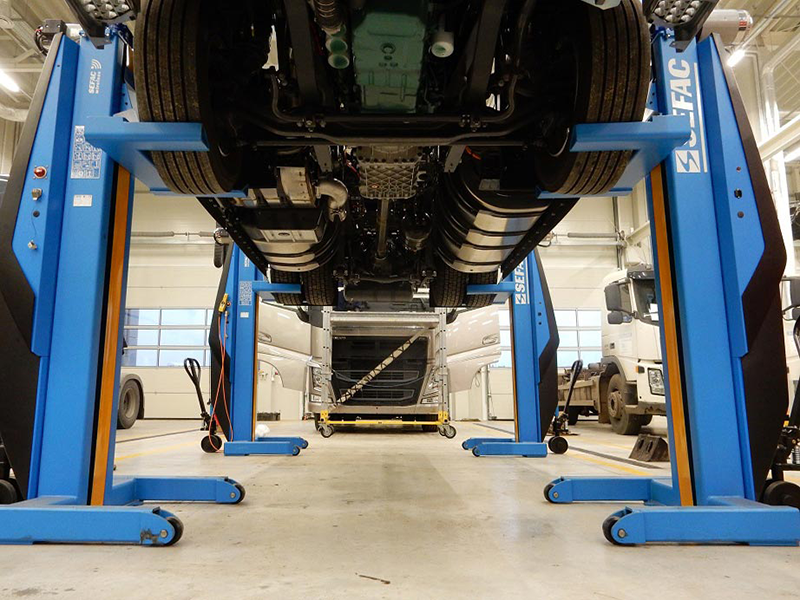
Big truck lifts are heavy-duty lifting systems specifically engineered to raise large commercial vehicles such as semi-trucks, buses, refuse vehicles, construction equipment, and specialized fleet vehicles. Unlike conventional automotive lifts, these systems are designed to handle significantly greater loads while providing technicians with safe and unrestricted access to critical vehicle components. Modern truck lifting solutions are available in fixed, cabled mobile, and wireless mobile configurations, allowing maintenance facilities to select the option that best matches their operational requirements.
Faster access means faster repairs
One of the primary ways big truck lifts reduce fleet downtime is by improving accessibility. Technicians need access to wheels, brakes, axles, suspension systems, drivetrains, and underbody components to perform inspections and repairs efficiently. Without proper lifting equipment, accessing these areas can be difficult and time-consuming. By elevating the entire vehicle, truck lifts eliminate many physical constraints that slow maintenance operations.
As a result, technicians can complete tasks more quickly, including:
- Brake inspections and replacements
- Suspension repairs
- Tire servicing
- Wheel-end maintenance
- Driveline repairs
- Preventive inspections
The time saved on each service event accumulates significantly across an entire fleet operation.
Improving preventive maintenance efficiency
Preventive maintenance is one of the most effective strategies for reducing unexpected breakdowns. However, maintenance programs only succeed when inspections can be completed consistently and efficiently.
Big truck lifts support preventive maintenance by simplifying vehicle access and reducing inspection times. Technicians can perform comprehensive evaluations of critical components without the restrictions often associated with service pits or floor-level inspections.
This improved accessibility allows maintenance teams to identify wear, damage, and potential failures before they become costly roadside breakdowns. In many cases, early detection prevents major repairs and helps keep vehicles operating according to schedule.
Increasing workshop throughput
Maintenance capacity directly impacts fleet availability. When workshops experience congestion or equipment limitations, vehicles spend more time waiting for service. Even simple repairs can become delayed when technicians lack adequate lifting resources. Big truck lifts increase workshop throughput by enabling multiple vehicles to be serviced more efficiently.
Mobile truck lift systems provide additional flexibility because they can be moved to different workstations as needed. This reduces bottlenecks and allows maintenance managers to optimize workflow throughout the facility. The result is a higher number of completed repairs per day and faster vehicle turnaround times.
Supporting technician productivity
Labor is one of the largest expenses in any maintenance operation. Maximizing technician productivity is therefore essential for controlling costs and reducing downtime. Poor vehicle access often forces technicians to spend valuable time repositioning equipment, crawling under vehicles, or working in uncomfortable conditions.
Big truck lifts create a more ergonomic working environment by positioning vehicles at optimal service heights. This improved accessibility enables technicians to work more efficiently while reducing fatigue and physical strain. Maintenance teams can complete more work during each shift, helping fleets return vehicles to service sooner.
Reducing unplanned vehicle outages
Unexpected failures are among the most disruptive causes of fleet downtime. Regular inspections conducted with the help of truck lifts allow maintenance personnel to detect problems before they escalate into major mechanical failures. Components such as brake systems, suspension assemblies, steering components, and wheel-end systems can be inspected thoroughly and consistently.
By identifying issues early, fleets can schedule repairs during planned maintenance windows rather than responding to costly roadside emergencies. This proactive approach improves vehicle reliability while minimizing service interruptions.
Wireless and mobile lift technology
Recent advancements in lifting technology have further improved maintenance efficiency. Wireless mobile lifts eliminate the need for communication cables between lifting columns, enabling faster deployment and greater flexibility. Maintenance teams can quickly position lifting columns around a vehicle and begin servicing operations with minimal setup time.
Because the system can be used throughout the workshop, operators gain additional flexibility when managing multiple maintenance tasks simultaneously. For busy fleet maintenance facilities, this adaptability contributes directly to reduced downtime and improved resource utilization.
As transportation companies continue to face increasing pressure to improve performance and control costs, investing in modern truck lifting solutions offers a proven way to keep vehicles on the road, technicians productive, and maintenance operations running at peak efficiency.