For a workshop manager, a bus lifts does more than raise a vehicle. Its real purpose is to help technicians inspect, maintain and return buses to service safely and efficiently. That distinction matters. A bus standing in the workshop cannot carry passengers, complete a school route or fulfil a coach schedule. Therefore, choosing lifting equipment is also a decision about fleet availability, workshop capacity and operational peace of mind.
The right bus lifts gives technicians reliable access to the vehicle while helping the workshop adapt to different buses and maintenance tasks. Ultimately, the objective is simple: maintain buses safely, remove avoidable workshop delays and keep more vehicles where they belong — on the road.

What is a bus lifts?
A bus lifts is professional workshop equipment designed to raise buses so technicians can safely access areas required for inspection, maintenance and repair. Depending on the technology, the vehicle may be lifted by its wheels or other approved lifting points.
Mobile column lifts are particularly suited to heavy vehicle workshops. Individual columns are positioned around the vehicle and operate together to raise it. Unlike permanently installed infrastructure, they can then be repositioned when workshop requirements change.
SEFAC mobile column systems can operate with different numbers of columns depending on the model and vehicle configuration. Its wireless SW3 system, for example, supports sets of two, four, six or eight columns. This modularity is especially relevant for workshops managing heterogeneous fleets.
However, capacity should never be assessed from vehicle weight alone. Axle loads, wheel dimensions, lifting points and vehicle configuration must all be checked before selecting or using a bus lifts.
Different buses create different workshop requirements
There is no single vehicle called “the bus”. A fleet may contain several architectures, dimensions and operating profiles. Consequently, a workshop designed around one vehicle type can become restrictive when the fleet evolves.
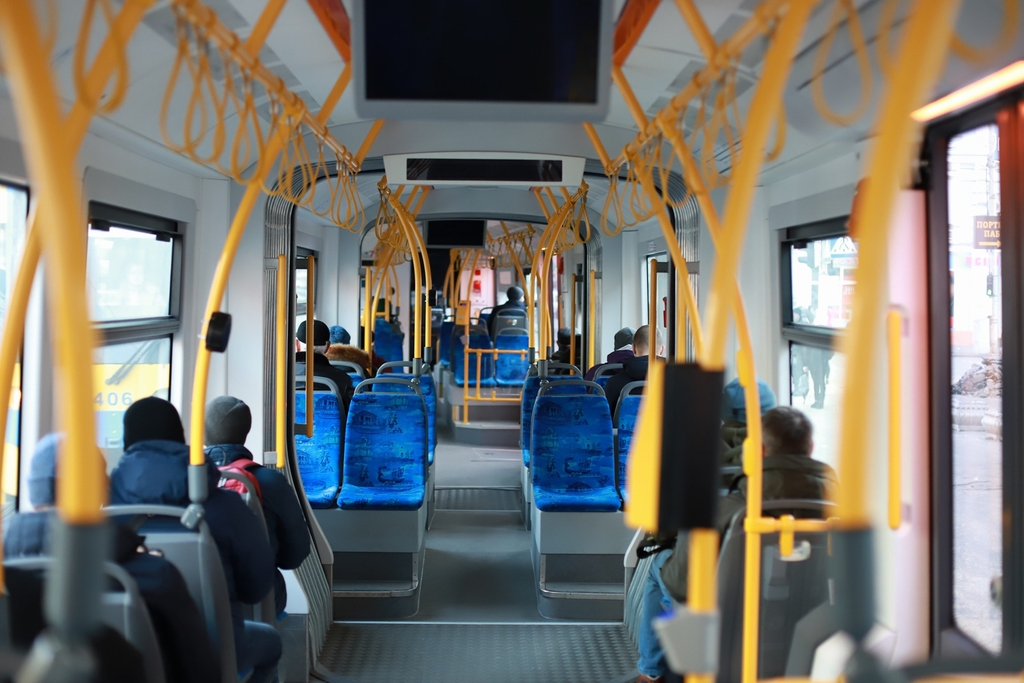
- A city or transit bus is designed for frequent stops and intensive daily operation. Availability is therefore critical because a maintenance delay can affect scheduled services.
- A coach is designed primarily for longer-distance passenger transport. These vehicles can have different dimensions, axle configurations and maintenance requirements from urban buses.
- A double-decker bus introduces additional dimensions and weight distribution considerations. An articulated bus, meanwhile, has multiple sections and a longer overall configuration.
- School buses, shuttle buses, minibuses and electric buses create further variations. Electric buses also introduce maintenance procedures linked to high-voltage systems and battery architecture.
For the workshop manager, this diversity changes the question. Instead of asking, “Can this lift raise a bus?”, ask: “Can our lifting system support the vehicles we maintain today and the fleet we expect tomorrow?” To explore the technical side of this decision, our guide to bus maintenance lift systems explains the available lifting technologies and the factors to consider before choosing equipment.
Keep more buses on the road with a lifting solution designed around your fleet.
Bus availability starts inside the workshop
Fleet availability is usually discussed through maintenance schedules, spare parts or driver resources. Yet workshop infrastructure also influences how efficiently maintenance can be performed.
Imagine that a bus arrives with a braking or suspension issue. The repair itself may be straightforward. However, the vehicle still needs an appropriate maintenance position, technicians need safe access, and the lifting equipment must be available.
If the suitable bay is occupied, the bus waits. If workshop infrastructure only accommodates certain vehicle configurations, planning becomes more complicated. Each small constraint can extend the period between a bus entering the workshop and returning to operation.
A mobile bus lifts can make the maintenance area more adaptable. SEFAC mobile columns can be moved into position and stored when they are not required. Therefore, part of the workshop floor can become a lifting area without permanently dedicating that space to one fixed installation.
The value is not simply faster lifting. It is greater freedom to organise maintenance around operational priorities.
A bus lifts can remove friction from everyday maintenance
Workshop efficiency rarely depends on one spectacular time saving. More often, it comes from removing small delays repeated across hundreds of interventions.
Technicians need access for tasks involving brakes, suspension, axles and other underbody components. Mobile column lifts leave the underside accessible once the vehicle has been correctly raised. This can help teams create a practical working environment around the maintenance task.
Mobility also matters between jobs. A workshop may need to accommodate a standard bus in the morning and a different wheelbase or vehicle type later that day. Repositionable columns allow the lifting area to adapt instead of forcing every vehicle into one permanent configuration.
Wireless systems can remove another workshop constraint: communication and power cables between columns. SEFAC’s SW3 columns are battery-powered and use the company’s SWIP wireless communication technology. The system can also be operated from any column.
For a busy depot, these details affect something much larger: how easily the workshop absorbs the unexpected.
Workshop safety is part of vehicle availability
Safety and productivity should never be treated as competing objectives. An unsafe shortcut is not an efficiency gain.
Heavy vehicle lifting requires controlled, synchronised movement and equipment suited to the vehicle being serviced. SEFAC uses an electromechanical screw-and-bronze-nut system in its mobile columns. On its S2 range, the company describes this drive as irreversible: the forks cannot lower without mechanical activation of the motor. The columns also incorporate safety features including obstacle detection and deadman controls.
Wireless SW3 columns communicate with one another to maintain synchronised operation. SEFAC also uses a system in which the columns communicate collectively rather than depending on a primary column controlling secondary units.
Technology, however, is only one layer of workshop safety. Correct vehicle positioning, capacity checks, lifting procedures, inspections and technician training remain essential. SEFAC therefore supports its lifting equipment with services including commissioning, training, annual inspection, troubleshooting and spare parts.
For the workshop manager, this creates a broader definition of reliability. A dependable bus lifts is not simply one that works today. It is equipment that can be correctly operated, inspected, maintained and supported throughout its working life.
Why flexibility matters when your fleet changes
Bus fleets do not remain static. Operators replace vehicles, introduce new models and adapt their fleets to changing passenger requirements. Electrification makes this particularly important. A new electric bus may differ from an existing diesel vehicle in mass distribution, underbody layout or approved maintenance procedures. Workshops therefore need to review lifting compatibility whenever new vehicles enter the fleet.
This is where modular lifting equipment can support long-term workshop planning. SEFAC mobile column lifts can be configured around different vehicle sizes, subject to the capacity and compatibility requirements of the specific equipment. The company also offers dedicated bus lifting beams and other accessories for its road lifting range.
Flexibility should not be confused with universal compatibility. Every vehicle and lifting configuration must still be assessed correctly. However, adaptable equipment can reduce the risk of designing a workshop around a fleet that no longer exists five years later.
The best bus lift is the one your team can depend on
Workshop managers rarely need more complexity. They need equipment that fits into daily operations without creating another problem to manage.
That means considering manoeuvrability, controls, diagnostics and maintenance alongside nominal lifting capacity. For example, SEFAC’s S4 wired mobile column includes a colour touchscreen for configuration and fault diagnosis. The company also designed its bronze nut system so that this wear component can be replaced on site rather than treating the complete column as a disposable assembly.
Support is equally important. When lifting equipment is unavailable, the effect can spread beyond a single maintenance job. Other vehicles may queue, bays may become harder to schedule and technicians may need to reorganise planned work. For this reason, the lifetime relationship with a lifting-equipment supplier matters. SEFAC provides spare parts, troubleshooting, annual inspections, commissioning and training alongside its equipment.
Peace of mind in a workshop comes from knowing that the equipment, people and support system are ready when the next bus arrives.
How should a workshop manager choose a bus lifts?
Start with the fleet rather than the catalogue. Record the buses currently maintained and the vehicles expected to enter service during the anticipated life of the equipment.
Then examine actual workshop operations. Consider available floor space, vehicle movement, typical maintenance tasks and the number of buses that may require attention simultaneously. The busiest day is often more informative than the average day.
Your assessment should cover:
- Vehicle requirements: Weight, axle loads, wheel dimensions, wheelbase, ground clearance and manufacturer-approved lifting points.
- Workshop requirements: Available space, floor suitability, vehicle circulation and access around the raised bus.
- Operational requirements: Maintenance frequency, peak workload, fleet diversity and required workshop flexibility.
- Safety requirements: Procedures, technician training, equipment inspection and appropriate vehicle support during relevant tasks.
- Future requirements: Fleet renewal, electric buses, new vehicle dimensions and expected workshop growth.
Only then should you compare lift capacities, wired or wireless operation, accessories and service arrangements. This approach changes procurement from “buying a lift” into designing reliable maintenance capacity.
Maximize fleet availability with the right bus lifting solution.
From workshop uptime to bus uptime
A bus lift is easy to view as a piece of workshop machinery. For a fleet operator, however, its impact extends beyond the workshop door.
Reliable lifting equipment helps technicians gain the access they need. Flexible equipment can make it easier to allocate workshop space. Appropriate safety technology and procedures support technicians while they work. Serviceability and technical support can also help protect the workshop’s lifting capability over time. Together, these factors contribute to a more predictable maintenance operation.
SEFAC designs and manufactures lifting solutions for buses and other heavy vehicles, with wired and wireless mobile column systems supported by technical services throughout the equipment lifecycle. Its objective is not simply to put a bus in the air. It is to give maintenance teams a lifting solution they can build their operations around. Because the real measure of a bus lifts is not how impressive a raised vehicle looks.
It is how safely and confidently the workshop can get that bus back on the road.